Source Diesel Powered Peanut Harvest Machine for Farms
Find and compare 30 diesel powered peanut harvest machine options from Chinese manufacturers. Evaluate specifications like power, weight, and packing for agricultural, forestry, and livestock applications to select the right portable harvester.
Key considerations
Products List


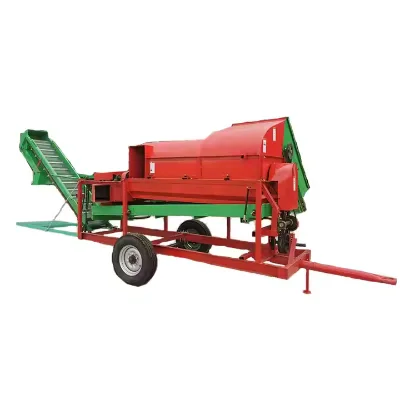


Comprehensive Sourcing Guide
Diesel Powered Peanut Harvest Machine Sourcing Guide
Sourcing diesel-powered peanut harvesters requires a careful balance between field performance, mechanical durability, and total cost of ownership. These machines are designed to operate independently of external power grids, making them ideal for remote fields or large-scale agricultural operations where tractor PTO connections are impractical or inefficient. The core value proposition lies in the machine’s ability to perform multiple harvesting functions—such as digging, lifting, shaking, and cleaning—in a single pass, significantly reducing labor costs and crop loss. Buyers must prioritize machines that offer robust transmission systems and reliable diesel engines capable of sustaining high torque under heavy loads.
The procurement process involves navigating a diverse supplier landscape, primarily concentrated in manufacturing hubs like Henan, China, where a significant volume of agricultural machinery is produced. Listings often reveal a wide range of specifications, from backpack-style units to side-hanging or ground-based models, each suited for different terrain types and farm sizes. Understanding the specific operational requirements of your farm, including soil conditions, crop density, and desired throughput, is essential before engaging with suppliers. This guide provides a structured approach to evaluating these machines based on observed market data, technical verification steps, and commercial best practices.
Product Scope and Observed Listing Signals
The current market for diesel-powered peanut harvesters exhibits a broad spectrum of product types, ranging from portable backpack units to larger, self-propelled or tractor-mounted systems. Observed listings indicate that manufacturers offer various configurations, including side-hanging types and specialized backpack models, catering to different scales of operation. For instance, some models are designed for high-capacity field work with outputs reaching up to 600 kg/h, while others focus on maneuverability in smaller plots. The color options are diverse, with red, blue, green, and yellow being common, though customization is frequently available to meet specific branding or visibility needs.
Price points for these machines vary significantly, with observed ranges spanning from approximately $375 to $4000 USD, reflecting differences in power output, build quality, and feature sets. Minimum Order Quantities (MOQ) are typically low, often ranging from 1 to 2 units, which facilitates trial purchases for small to medium-sized farms. Packaging is a critical logistical consideration, with most suppliers using wooden boxes or specially tailored wooden cases to protect the machinery during international shipping. Buyers should note that while some listings mention CE certification, this is not universal across all models or suppliers, requiring individual verification for each potential purchase.
Technical Specifications to Verify
When evaluating diesel-powered peanut harvesters, the power source and transmission system are primary technical differentiators. Most observed models utilize diesel engines with power ratings around 7.5 kW (12 HP), providing sufficient energy for independent operation. Transmission types vary, with hard shaft, soft shaft, gear drive, and Vee belt drives being common configurations. Each transmission type offers distinct advantages: gear drives typically provide higher torque and durability for heavy-duty applications, while Vee belts may offer smoother operation and easier maintenance. Buyers must verify the specific transmission mechanism to ensure it aligns with their maintenance capabilities and operational intensity.
Capacity and efficiency metrics are equally critical for assessing machine performance. Observed data suggests that production capacities can range from 400 to 600 kg/h for certain models, while others may list area-based capacities such as 2660-5400 m²/h. Cleanliness rates are often cited as a key performance indicator, with some models claiming >=99% cleanliness, which directly impacts the final quality of the harvested peanuts. Additionally, overall dimensions and weight are important for logistics and field maneuverability; for example, some units weigh around 128-200 kg and have specific footprint dimensions like 13009501370 mm. Buyers should request detailed technical sheets to confirm these specifications, as they can vary significantly between models like the SPD-100, SPN-100, or HT-ZG80A.
Compliance and Safety Documentation
Certification status is a vital component of the procurement process, particularly for international trade. While some listings explicitly mention CE certification, indicating compliance with European health, safety, and environmental protection standards, this is not a guaranteed attribute for all diesel-powered peanut harvesters. Buyers must explicitly request and verify valid certification documents for each specific model before placing an order. Relying on general listing claims without documented proof can lead to customs delays or regulatory non-compliance in the destination country. It is advisable to ask for the original test reports or certificates issued by recognized third-party agencies.
Safety features and operational documentation are often overlooked but are essential for long-term usability. Diesel engines require proper ventilation and exhaust management, so buyers should ensure the machine design includes adequate safety guards and warning labels. Furthermore, the availability of comprehensive user manuals in the buyer’s local language is crucial for proper operation and maintenance. Suppliers should provide clear instructions on engine startup, shutdown procedures, and emergency stop mechanisms. Verifying that the machine meets local agricultural machinery safety standards in the destination country is a necessary step to avoid legal liabilities and ensure operator safety.
Cost Drivers and Commercial Terms
The total cost of ownership extends beyond the initial purchase price, encompassing shipping, insurance, and potential import duties. Observed price ranges of $375-$4000 USD suggest that basic models are competitively priced, but buyers must account for additional logistics costs. Packaging plays a significant role in shipping expenses; wooden cases, while protective, add weight and volume. Buyers should negotiate Incoterms carefully, understanding whether the quoted price includes freight to the nearest port or door. For smaller orders, air freight may be prohibitively expensive, making sea freight the preferred option, which requires accurate dimension and weight data for cost estimation.
Payment terms and warranty policies are key commercial considerations that can impact cash flow and risk management. Standard practices often involve a deposit followed by balance payment before shipment, but buyers should strive for secure payment methods such as Letters of Credit or escrow services for first-time transactions. Warranty coverage for diesel engines and transmission components should be clearly defined, including the duration and scope of parts replacement. Buyers should also inquire about the availability of spare parts, such as belts, filters, and engine components, to minimize downtime during peak harvesting seasons. Clarifying these terms upfront prevents unexpected costs and ensures long-term operational support.
Supplier Qualification and Quality Control
Supplier verification is the first line of defense against procurement risks. Buyers should prioritize suppliers with established manufacturing capabilities, preferably located in known industrial clusters like Henan Province, China, where a high concentration of agricultural machinery producers exists. Requesting video tours of the production facility or recent factory audit reports can provide insights into the supplier’s quality control processes and production capacity. It is also advisable to check the supplier’s business license and export history to ensure they are a legitimate entity capable of fulfilling international orders.
Quality control measures should be implemented both during production and before shipment. Buyers can request pre-shipment inspection reports or hire third-party inspection agencies to verify that the machines meet the agreed-upon specifications. Key inspection points include engine performance tests, transmission functionality, structural integrity, and cleanliness of the final product. Additionally, verifying the consistency of packaging standards is crucial to prevent damage during transit. Establishing a clear communication channel with the supplier for addressing any discrepancies or defects post-delivery is also an important aspect of supplier qualification.
Long-Term Procurement Checks
After the initial purchase, ongoing evaluation of machine performance and supplier reliability is essential for future procurement decisions. Buyers should track key performance indicators such as fuel efficiency, maintenance frequency, and overall durability under field conditions. Feedback from field operators can provide valuable insights into the machine’s usability and potential design flaws. Regularly reviewing these performance metrics helps in making informed decisions for subsequent purchases or upgrades. Maintaining a record of all communications, contracts, and inspection reports creates a reliable reference for future negotiations and dispute resolution.
Building a long-term relationship with a trusted supplier can lead to better pricing, priority production, and improved after-sales support. Buyers should consider consolidating orders with reliable suppliers to leverage volume discounts and streamline logistics. Additionally, staying updated on technological advancements in diesel-powered peanut harvesters can help buyers identify newer, more efficient models for future procurement. Engaging with industry forums or agricultural networks can provide broader market insights and benchmarking data. By maintaining a proactive approach to supplier management and market research, buyers can optimize their procurement strategy and ensure sustainable agricultural operations.
FAQs
What power sources are available for portable peanut harvesters?
Portable peanut harvesters utilize diesel, electric, or tractor power sources depending on the model. Diesel engines offer high mobility for field use, while electric options provide quieter operation. Tractor-driven units leverage existing farm machinery for heavy-duty tasks. Buyers should select the power source that matches their operational environment and energy availability constraints.
Which certifications are standard for these agricultural machines?
Many models carry CE certification, ensuring compliance with European safety and quality standards. This certification is critical for exporters targeting regulated markets. Buyers should verify specific documentation for each supplier. Always confirm that the machine meets local regulatory requirements before purchase to avoid customs delays or operational restrictions in your region.
How is the packaging handled for international shipping?
Machines are typically packed in wooden boxes, fumigation-free wooden cases, or special tailored wooden cases. This robust packaging protects the equipment during transit. The dimensions vary by model, such as 125x78x120cm or larger configurations. Buyers should request exact packing dimensions to calculate freight costs accurately and ensure container compatibility.
Can these harvesters be customized for specific needs?
Customization is available for many portable harvester models. Buyers can often choose colors like red, blue, green, or yellow. Specific modifications may be possible for transmission types or structural adjustments. Contact suppliers directly to discuss custom requirements, as availability depends on the manufacturer's production capabilities and the specific model selected.
What is the typical weight and size of these units?
Weights range from approximately 128kg to 200kg, depending on the model and power source. Overall sizes vary, with some models measuring around 1300x950x1370mm. These dimensions ensure portability while maintaining structural integrity. Buyers should check specific model specifications to ensure the machine fits their storage and transport requirements.